Introduction
Best Practices for RO Plant Operation and Monitoring are essential for ensuring long-term system efficiency, reduced operational costs, improved membrane life, and consistent water quality. Reverse Osmosis (RO) plants are widely used in industrial, commercial, and municipal sectors for water purification. However, improper operation, poor monitoring, and incorrect chemical dosing can lead to membrane fouling, scaling, high energy consumption, and frequent breakdowns.
In this detailed guide, we will explore the best practices for operating and monitoring an RO plant to achieve optimal performance, prevent membrane damage, and maintain consistent water output quality.
Understanding RO Plant Operation
Best Practices for RO Plant Operation and Monitoring. Reverse Osmosis works on the principle of applying pressure to force water through a semi-permeable membrane that removes dissolved salts, contaminants, and impurities.
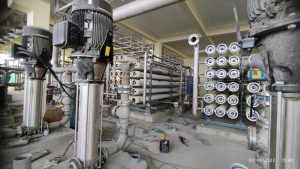
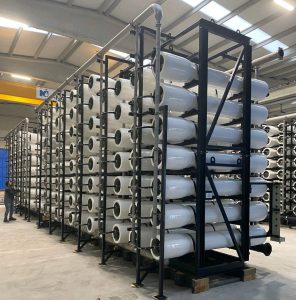
Key Components of an RO Plant
-
Raw water feed system
-
Pre-treatment unit (sand filter, carbon filter, softener)
-
Cartridge filter
-
High-pressure pump
-
RO membranes
-
Chemical dosing system
-
Control panel & instrumentation
Proper coordination of these components is critical for smooth plant operation.
Importance of Proper Pre-Treatment
Best Practices for RO Plant Operation and Monitoring. Pre-treatment is the backbone of RO system performance. Without proper pre-treatment, membrane fouling occurs rapidly.
Sand Filtration
Removes suspended solids and turbidity.
Activated Carbon Filtration
Removes chlorine, organic matter, and odor.
Water Softening
Prevents hardness scaling caused by calcium and magnesium.
Antiscalant Dosing
Prevents scale formation on membranes.
Failure in pre-treatment leads to:
-
High differential pressure
-
Reduced permeate flow
-
Frequent membrane cleaning
-
Shortened membrane lifespan
Chemical Treatment Best Practices
Best Practices for RO Plant Operation and Monitoring. Chemical dosing plays a vital role in RO plant efficiency.
Antiscalant Dosing
Antiscalants prevent scale formation from:
-
Calcium carbonate
-
Calcium sulfate
-
Silica
-
Barium sulfate
Best Practices:
-
Dose based on feed water analysis
-
Maintain correct ppm level
-
Calibrate dosing pumps monthly
Dechlorination
Chlorine damages RO membranes. Use:
-
Sodium bisulfite dosing
-
Activated carbon filter
pH Adjustment
Maintain optimal feed pH (usually 6–7.5 depending on design).
Membrane Cleaning Chemicals
Use:
-
Acid cleaners for scale
-
Alkaline cleaners for organic fouling
-
Biocides for biological fouling
Monitoring Key RO Plant Parameters
Best Practices for RO Plant Operation and Monitoring. Proper monitoring is a critical part of Best Practices for RO Plant Operation and Monitoring.
Feed Pressure
-
Sudden increase indicates fouling.
-
Sudden drop indicates pump issues.
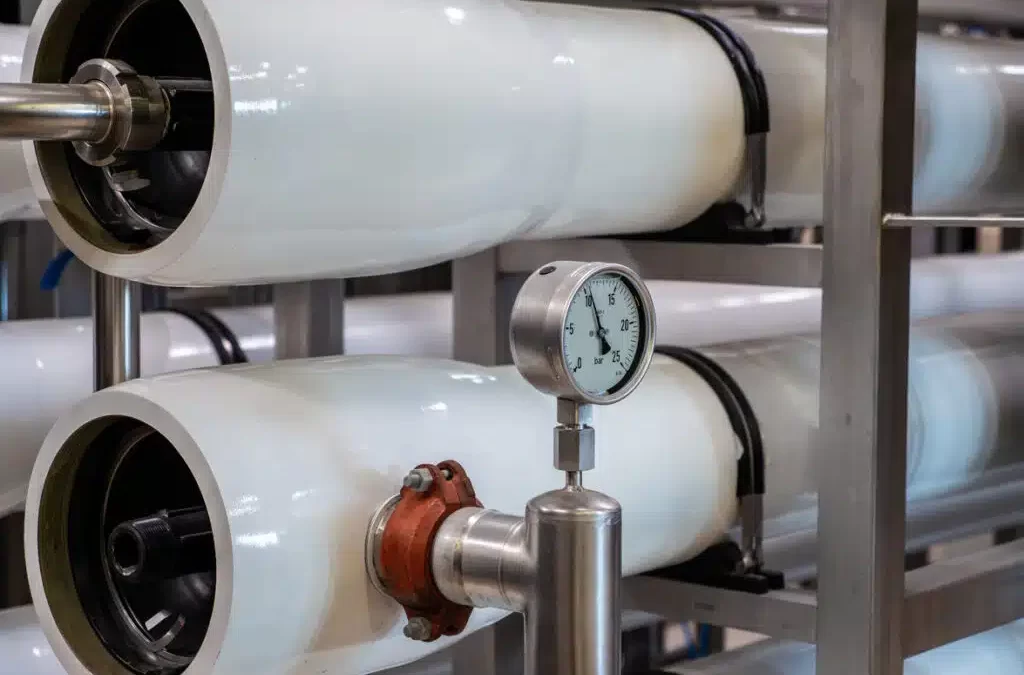
Differential Pressure (ΔP)
Monitor pressure difference between:
-
Feed and concentrate
-
Across membrane stages
High ΔP indicates scaling or fouling.
Permeate Flow Rate
Reduction may indicate:
-
Membrane fouling
-
Scaling
-
Blocked cartridge filters
Salt Rejection %
Calculate regularly:
Salt Rejection (%) =
((Feed TDS – Permeate TDS) / Feed TDS) × 100
Declining rejection indicates membrane damage.
Recovery Rate
Maintain recommended recovery (typically 50–75% depending on design).
Preventing Common RO Problems
Scaling
Causes:
-
High hardness
-
Poor antiscalant dosing
Prevention:
-
Correct chemical dosing
-
Regular feed analysis
Organic Fouling
Causes:
-
High organic load
-
Inadequate pre-treatment
Prevention:
-
Carbon filtration
-
Regular cleaning
Biological Fouling
Causes:
-
Bacterial growth
-
Poor sanitation
Prevention:
-
Biocide treatment
-
Regular sanitization
Membrane Oxidation
Caused by chlorine exposure.
Prevention:
-
Monitor ORP
-
Ensure proper dechlorination
Cleaning-In-Place (CIP) Procedures
CIP should be done when:
-
10–15% drop in permeate flow
-
10–15% increase in differential pressure
-
5–10% decrease in salt rejection
CIP Best Practices:
-
Use correct chemical concentration
-
Maintain recommended temperature
-
Circulate for 30–60 minutes
-
Rinse thoroughly
Regular CIP increases membrane life significantly.
Data Logging and Record Keeping
Maintaining records is essential for monitoring trends.
Daily log sheet should include:
-
Feed pressure
-
Permeate pressure
-
Differential pressure
-
Flow rate
-
TDS levels
-
pH levels
-
Chemical dosing rate
Trend analysis helps detect problems early.
Energy Optimization
Energy consumption is a major cost in RO plant operation.
Best Practices:
-
Maintain clean membranes
-
Operate within design pressure
-
Check pump efficiency
-
Avoid over-recovery
Operator Training and Safety
Well-trained operators reduce system failures.
Training should include:
-
Understanding RO process
-
Chemical handling
-
Emergency procedures
-
Data recording
Safety measures:
-
Use PPE
-
Handle chemicals carefully
-
Follow MSDS guidelines
Membrane Storage and Replacement
If RO plant shutdown exceeds 48 hours:
-
Flush system with permeate water
-
Add preservative solution
-
Avoid dry storage
Replace membranes when:
-
Cleaning does not restore performance
-
Salt rejection falls permanently
Automation and Remote Monitoring
Modern RO systems use:
-
PLC control panels
-
SCADA systems
-
Online TDS meters
-
Pressure sensors
Automation improves:
-
Accuracy
-
Efficiency
-
Early fault detection
Regular Maintenance Checklist
Daily:
-
Check pressures
-
Check flow rates
-
Inspect leaks
Weekly:
-
Clean strainers
-
Inspect dosing pumps
Monthly:
-
Calibrate instruments
-
Inspect membranes
Quarterly:
-
Perform complete system inspection
Benefits of Following Best Practices for RO Plant Operation and Monitoring
-
Extended membrane life
-
Lower chemical costs
-
Reduced downtime
-
Improved water quality
-
Lower energy consumption
-
Higher plant efficiency
Conclusion
Best Practices for RO Plant Operation and Monitoring are not optional—they are essential for ensuring reliable performance, consistent water quality, and long-term cost savings. Proper chemical treatment, regular monitoring of operational parameters, timely cleaning, and preventive maintenance significantly enhance membrane life and system efficiency.
By implementing structured monitoring systems, maintaining accurate records, and training operators effectively, industries can prevent common RO plant problems such as scaling, fouling, and membrane damage.
A well-maintained RO plant delivers stable performance, reduces operational risks, and ensures sustainable water treatment for years to come.