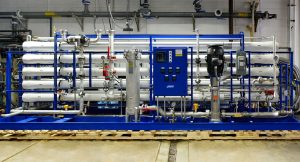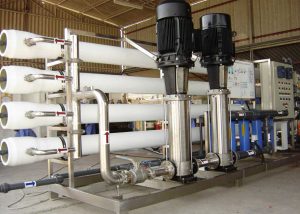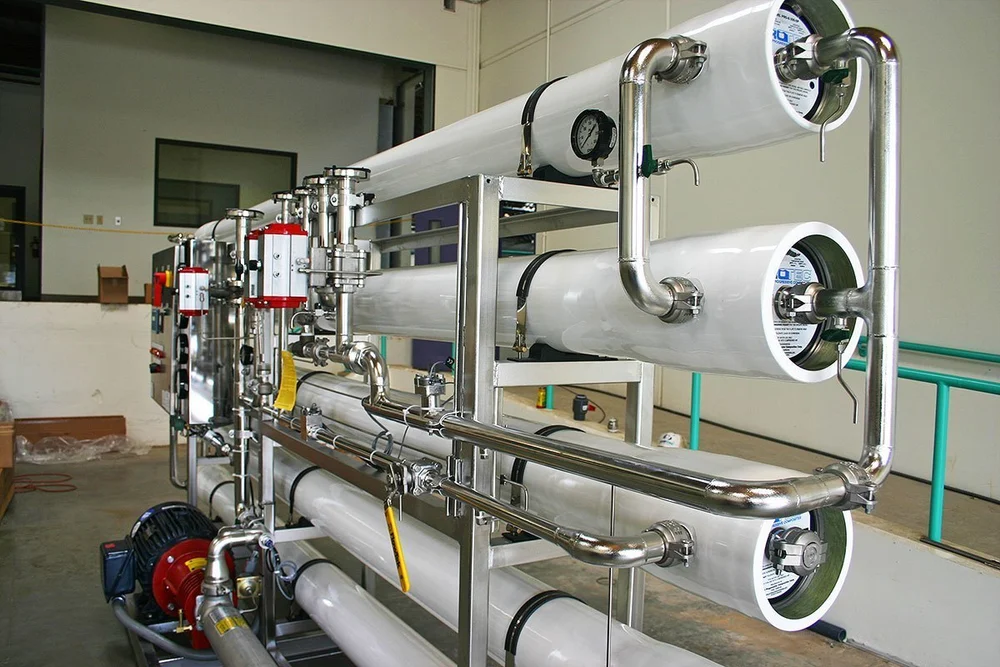
Reverse osmosis (RO) systems are widely used in industrial, municipal, and commercial water treatment applications to produce high-quality permeate water. However, one of the most critical challenges affecting RO membrane performance is scale formation. Scaling occurs when dissolved inorganic salts exceed their solubility limits and precipitate on the membrane surface, causing fouling, pressure drop, reduced permeate flow, and shortened membrane life. To control this issue, reverse osmosis antiscalant chemicals are dosed into the RO feed water. These specialty chemicals are designed using advanced chemical formulations that interfere with scale crystal growth, prevent precipitation, and maintain stable membrane operation under high recovery conditions.
Reverse osmosis antiscalant chemical formula as a leading water treatment chemicals manufacturer for RO membranes, our products are designed to enhance membrane performance and longevity. Our innovative chemicals effectively reduce fouling and scaling, ensuring optimal water purification in various applications, including municipal water treatment, industrial processes, and food and beverage production. We serve a wide range of industries, providing tailored solutions that meet specific regulatory and operational requirements. Customers choose us for our commitment to quality, exceptional technical support, and our extensive experience in delivering reliable and efficient water treatment solutions.
Reverse osmosis antiscalant chemical formula understanding the reverse osmosis antiscalant chemical formula concept is essential for system designers, operators, and plant managers who want to ensure optimal RO performance. While the exact formulation of high-quality antiscalants is proprietary, their functional chemistry and mechanism of action can be clearly explained.
What Is a Reverse Osmosis Antiscalant?
Reverse osmosis antiscalant chemical formula is a specialized water treatment chemical added in very low doses (typically parts per million) to inhibit the formation and deposition of sparingly soluble salts on RO membranes. Unlike acid dosing, which only adjusts pH, antiscalants work across a wide range of operating conditions and target multiple scale-forming ions simultaneously.
Modern antiscalant formulations are engineered to perform under:
- High total dissolved solids (TDS)
- Elevated recovery rates
- Variable pH conditions
- Mixed scale environments
- Presence of iron and trace metals
The chemical formula of an RO antiscalant is not a single compound but a synergistic formulation
designed for maximum inhibition efficiency and long-term membrane protection. To select the right antiscalant chemistry for your system, contact Memco team for technical
evaluation.
Common Types of Scale in RO Systems
Reverse osmosis antiscalant chemical formula before discussing antiscalant chemical formulation principles, it is important to understand the types of scale typically encountered in RO feed water.
Calcium Carbonate Scale
One of the most common forms of scaling, calcium carbonate precipitates when alkalinity, calcium concentration, and pH increase. This scale is hard, crystalline, and can rapidly reduce membrane permeability reverse osmosis antiscalant chemical formula.
Calcium Sulfate Scale
Calcium sulfate forms under high sulfate and calcium concentrations. Reverse osmosis antiscalant chemical formula it is less affected by pH adjustment and requires strong inhibition chemistry to prevent deposition.
Barium and Strontium Sulfate Scale
These sulfate scales are extremely insoluble and can form even at very low concentrations. Once deposited, they are difficult to remove through cleaning.
Silica Scale
Silica scaling is particularly challenging because it can form both crystalline and amorphous deposits. At high concentrations, silica can permanently foul membranes.
Metal Oxide and Hydroxide Deposits
Iron, aluminum, and manganese can form sticky deposits that trap other particles and initiate secondary fouling.
A properly engineered reverse osmosis antiscalant chemical formula must address all these scaling risks simultaneously. For scale risk analysis, contact Memco team.
Concept of Antiscalant Chemical Formula in RO
The term “chemical formula” in the context of RO antiscalants does not refer to a simple molecular structure like NaCl or CaCO₃. Instead, it refers to a functional formulation design that delivers specific performance outcomes.
A high-performance antiscalant formulation is designed to:
- Interfere with nucleation of scale crystals
- Distort crystal lattice structure
- Disperse micro-crystals in suspension
- Prevent adhesion of scale to membrane surfaces
- Stabilize ions beyond saturation limits
These functions are achieved through carefully balanced chemical components that act synergistically. If you require formulation performance data or compatibility details, contact Memco team.
Mechanism of Action of RO Antiscalant Chemicals
Threshold Inhibition
RO antiscalants operate effectively at very low dosages by keeping scale-forming salts dissolved even when their concentration exceeds normal solubility limits. This phenomenon is known as threshold inhibition.
Crystal Modification
Instead of allowing scale crystals to grow in a dense, adherent form, antiscalants alter crystal morphology. The resulting crystals are irregular, soft, and non-adherent, allowing them to pass
harmlessly through the RO system.
Dispersion Action
Antiscalants help keep suspended solids and micro-crystals dispersed in the feed water, preventing agglomeration and deposition on membrane surfaces.
Surface Interaction Control
Advanced antiscalant chemistry reduces the tendency of scale particles to attach to the membrane surface by modifying interfacial forces.
Key Performance Characteristics of RO Antiscalant Formulations
A technically sound reverse osmosis antiscalant chemical formula exhibits the following performance characteristics:
- Effective over a wide pH range
- Compatible with common RO membranes
- Stable at high temperature conditions
- Resistant to hydrolysis during storage
- Low foaming behavior
- High solubility in water
- Non-interfering with downstream processes
These characteristics are essential for long-term membrane protection and stable plant operation.
Importance of Proper Antiscalant Selection
Using the wrong antiscalant chemistry can lead to:
- Inadequate scale control
- Increased differential pressure
- Frequent chemical cleaning
- Reduced membrane life
- Higher operating costs
Antiscalant selection should always be based on:
- Feed water chemistry analysis
- Operating recovery percentage
- Temperature and pH conditions
- Target scale indices
- System design parameters
Generic antiscalants may not provide sufficient protection under challenging conditions. Customized selection ensures optimal performance.
Industrial Applications of RO Antiscalant Chemicals
Reverse osmosis antiscalants are widely used in:
- Municipal drinking water plants
- Industrial process water systems
- Power plant boiler feed RO units
- Pharmaceutical water systems
- Food and beverage RO plants
- Textile and dyeing industries
- Semiconductor manufacturing
- Desalination and seawater RO systems
Each application presents unique challenges, requiring specific antiscalant performance characteristics.
Role of Antiscalants in High-Recovery RO Systems
Modern RO plants are designed to operate at higher recovery rates to reduce reject volume and operating costs. However, higher recovery increases the concentration of scale-forming salts.
A well-engineered antiscalant chemical formula enables:
- Safe operation at elevated recoveries
- Reduced need for acid dosing
- Stable permeate flow rates
- Lower cleaning frequency
- Improved system economics
This makes antiscalants an essential component of sustainable RO operation.
Dosage Principles for RO Antiscalant Chemicals
Antiscalants are typically dosed in the range of 1–10 ppm, depending on feed water chemistry and system design. Correct dosage is critical:
- Under-dosing can result in scaling
- Over-dosing may cause membrane fouling or unnecessary cost
Dosage calculations are based on ion concentration, saturation indices, and system recovery.
For accurate dosage calculation tools, contact Memco team.
Storage and Handling Considerations
High-quality reverse osmosis antiscalants are formulated for stability during storage and transport. However, proper handling ensures consistent performance:
- Store in cool, shaded areas
- Avoid contamination with incompatible chemicals
- Use clean dosing equipment
- Follow recommended shelf-life guidelines
Benefits of Using Advanced RO Antiscalant Chemistry
Using a technically advanced antiscalant formulation provides multiple benefits:
- Extended membrane lifespan
- Reduced chemical cleaning frequency
- Improved system uptime
- Lower operating and maintenance costs
- Enhanced permeate quality
- Increased plant reliability
These benefits directly impact overall water treatment efficiency and cost savings. To experience these benefits, contact Memco team.
Why Choose a Technically Engineered Antiscalant Solution
Not all antiscalants deliver the same level of protection. Performance depends on formulation science, quality control, and application expertise.
A reliable antiscalant solution should be supported by:
- Technical evaluation
- Water analysis support
- On-site troubleshooting
- Performance monitoring
- Continuous improvement
For a technically engineered solution tailored to your RO system, contact Memco team.
Conclusion
The reverse osmosis antiscalant chemical formula is not a single compound but a carefully engineered formulation designed to control scaling, protect membranes, and optimize RO system performance. Understanding its functional chemistry and correct application is essential for reliable and cost-effective water treatment operations. Selecting the right antiscalant, applying the correct dosage, and monitoring system performance can significantly enhance RO efficiency and membrane life. For expert technical support, customized antiscalant solutions, and professional guidance, contact Memco team today.
FAQ SECTION
FAQ 1: What is a reverse osmosis antiscalant chemical formula?
A reverse osmosis antiscalant chemical formula refers to a specialized functional formulation designed to inhibit scale formation on RO membranes by controlling crystal growth, dispersion, and surface interaction under high-salinity conditions. For formulation guidance, contact Memco team.
FAQ 2: Why is antiscalant required in RO systems?
Antiscalants prevent mineral precipitation that causes membrane fouling, pressure drop, and reduced permeate flow. They allow RO systems to operate safely at higher recovery rates and lower operating costs. To select the right solution, contact Memco team.
FAQ 3: Which scales are controlled by RO antiscalants?
RO antiscalants are designed to control carbonate scales, sulfate scales, silica deposits, and metal based deposits that commonly affect membrane performance. For feed-water-specific scale analysis, contact Memco team.
FAQ 4: What is the typical dosage of RO antiscalant?
Dosage usually ranges from 1 to 10 ppm, depending on feed water chemistry, recovery rate, and operating conditions. Incorrect dosing may lead to scaling or fouling. For accurate dosage calculation, contact Memco team.
FAQ 5: Can antiscalant replace acid dosing in RO systems?
In many cases, a properly selected antiscalant can significantly reduce or eliminate the need for acid dosing, improving system safety and operational stability. To evaluate suitability, contact Memco team.
FAQ 6: Is RO antiscalant compatible with all membranes?
High-quality antiscalants are designed for compatibility with most commercial RO membranes. However, verification is essential before application. For compatibility confirmation, contact Memco team.